Beyond Nashulai
A proven model. A growing movement.
Training the Next Generation
For generations, young Maasai have faced a difficult choice: leave their ancestral lands in search of education and economic opportunity, or remain at home with limited access to the skills and training needed to build a livelihood. We believe they should not have to choose between opportunity and their culture, community and land.
QUOTE HERE
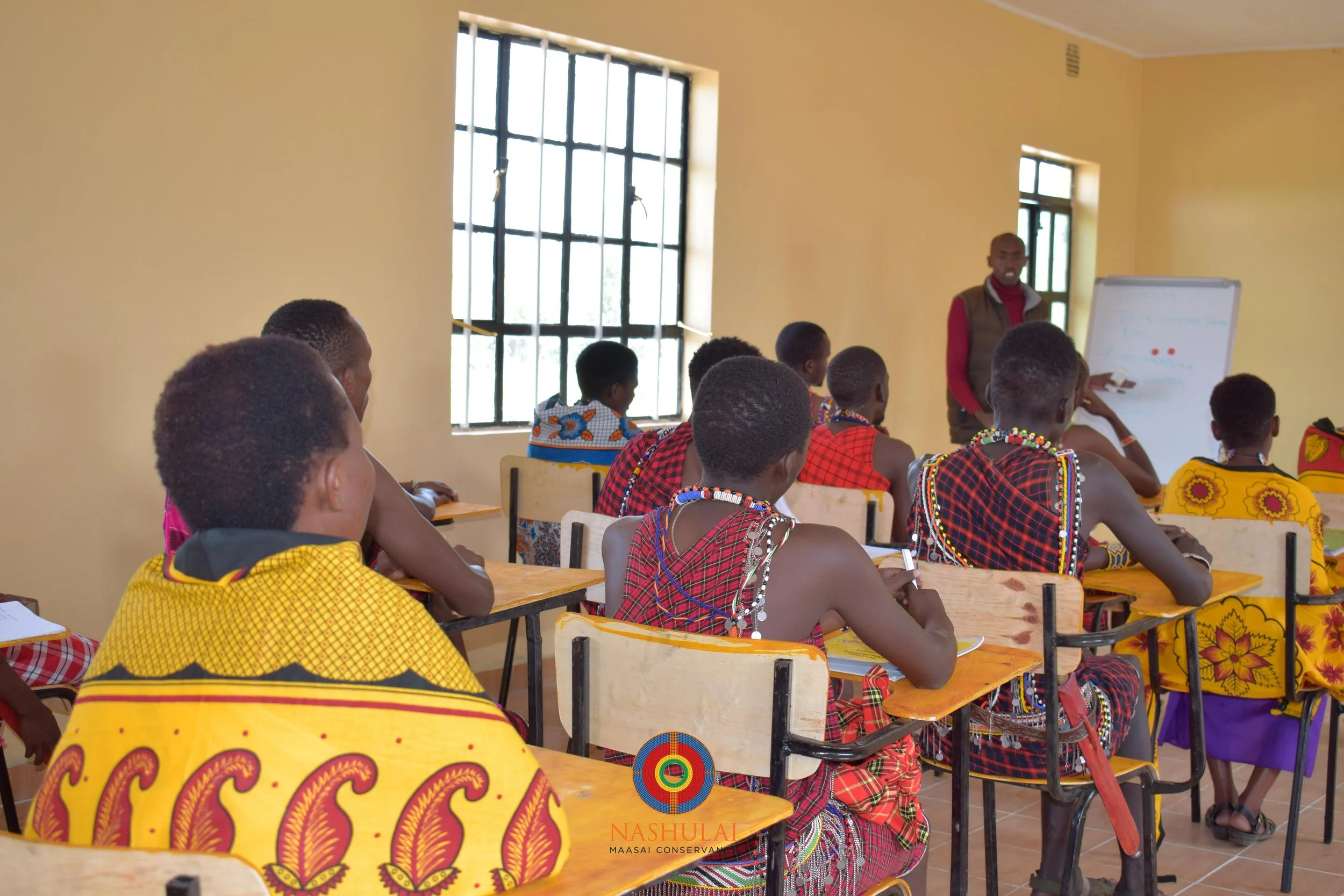
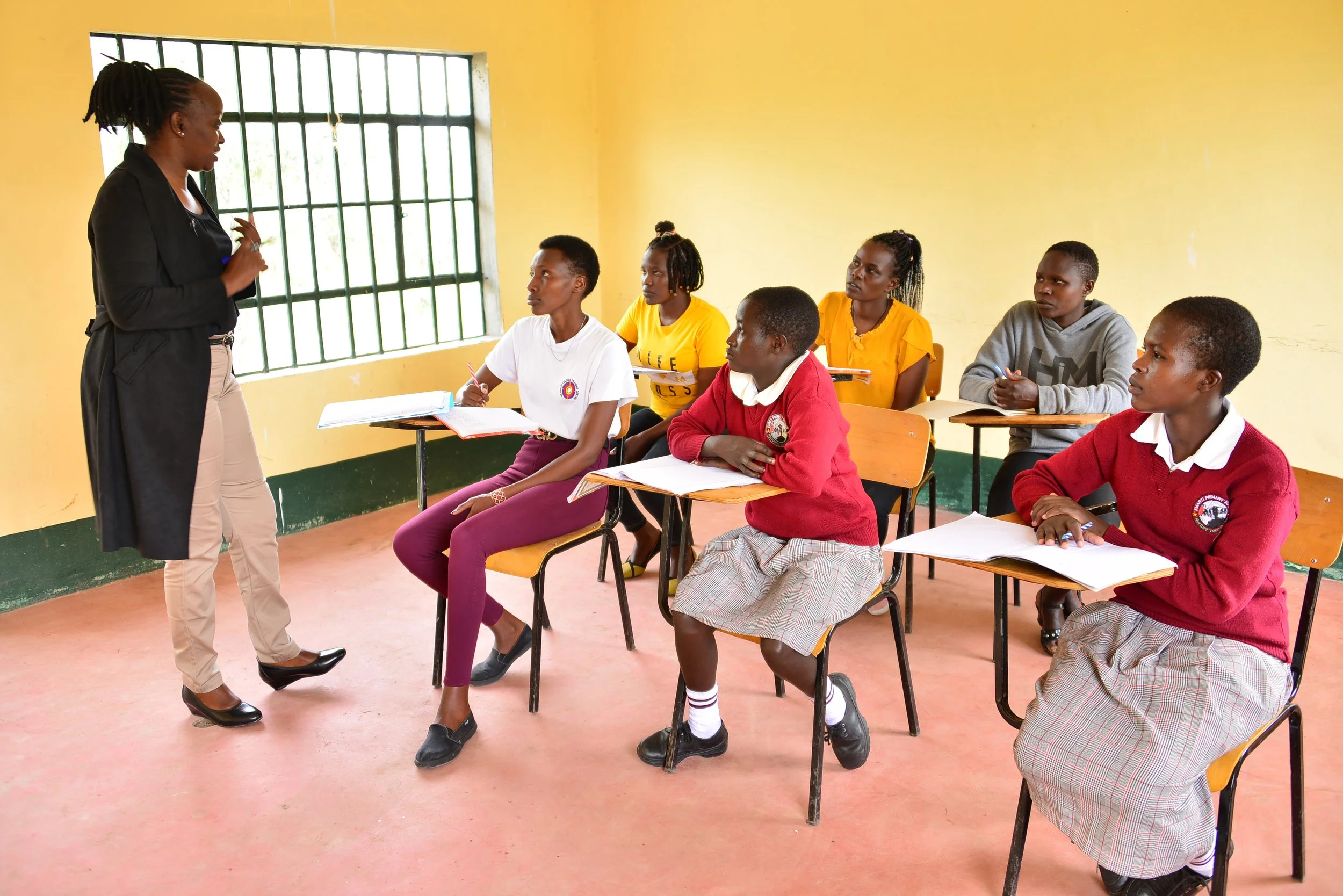
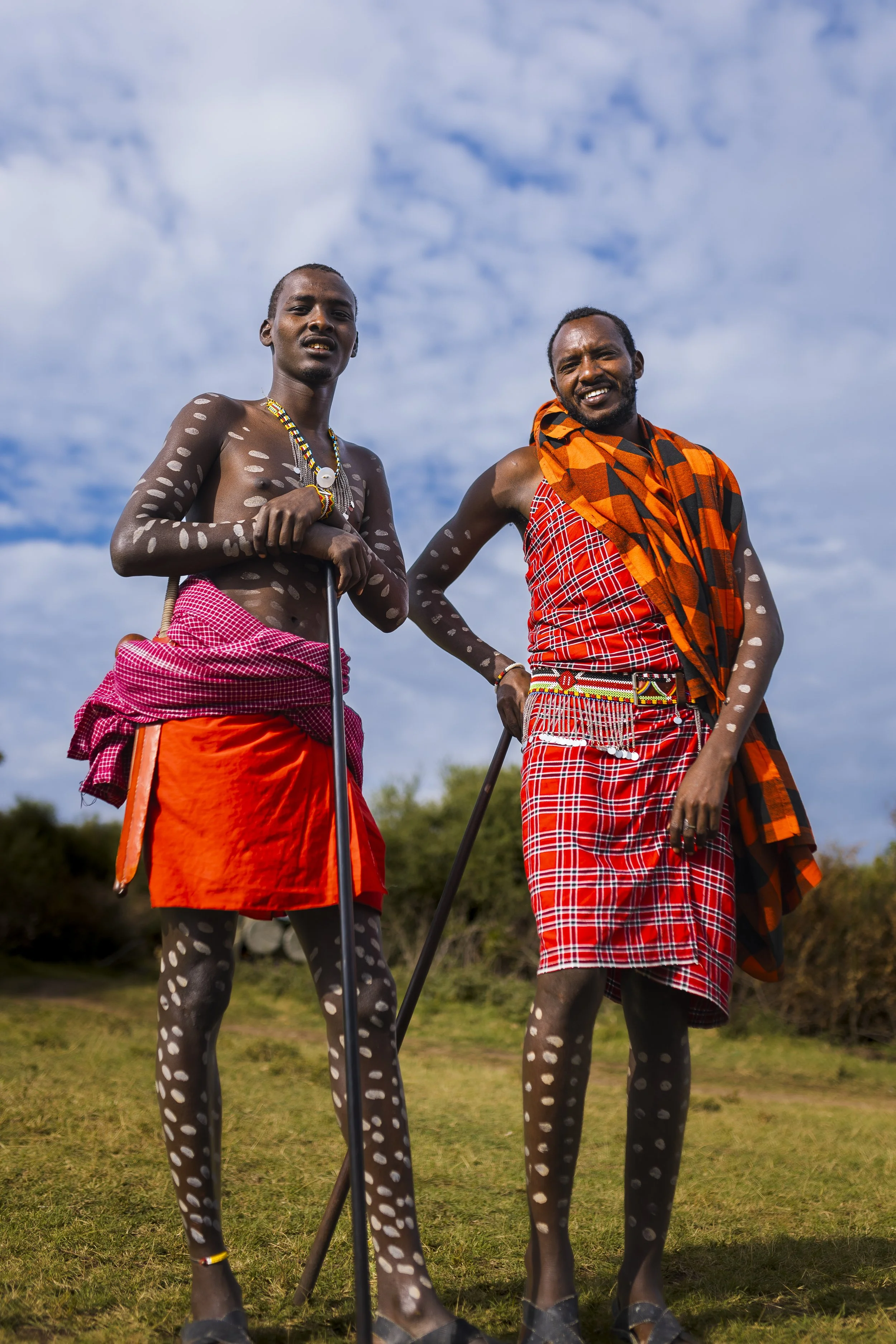
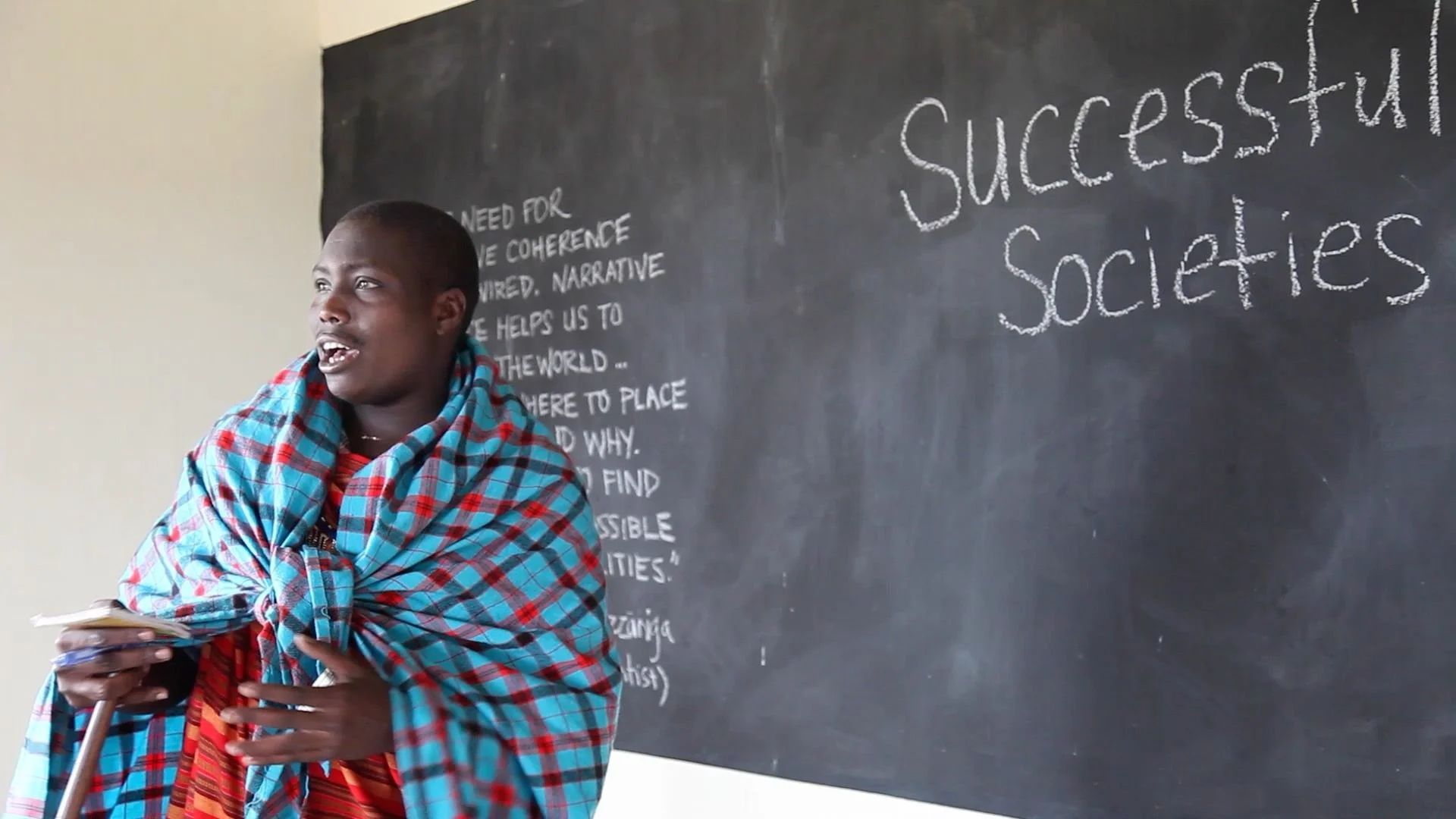
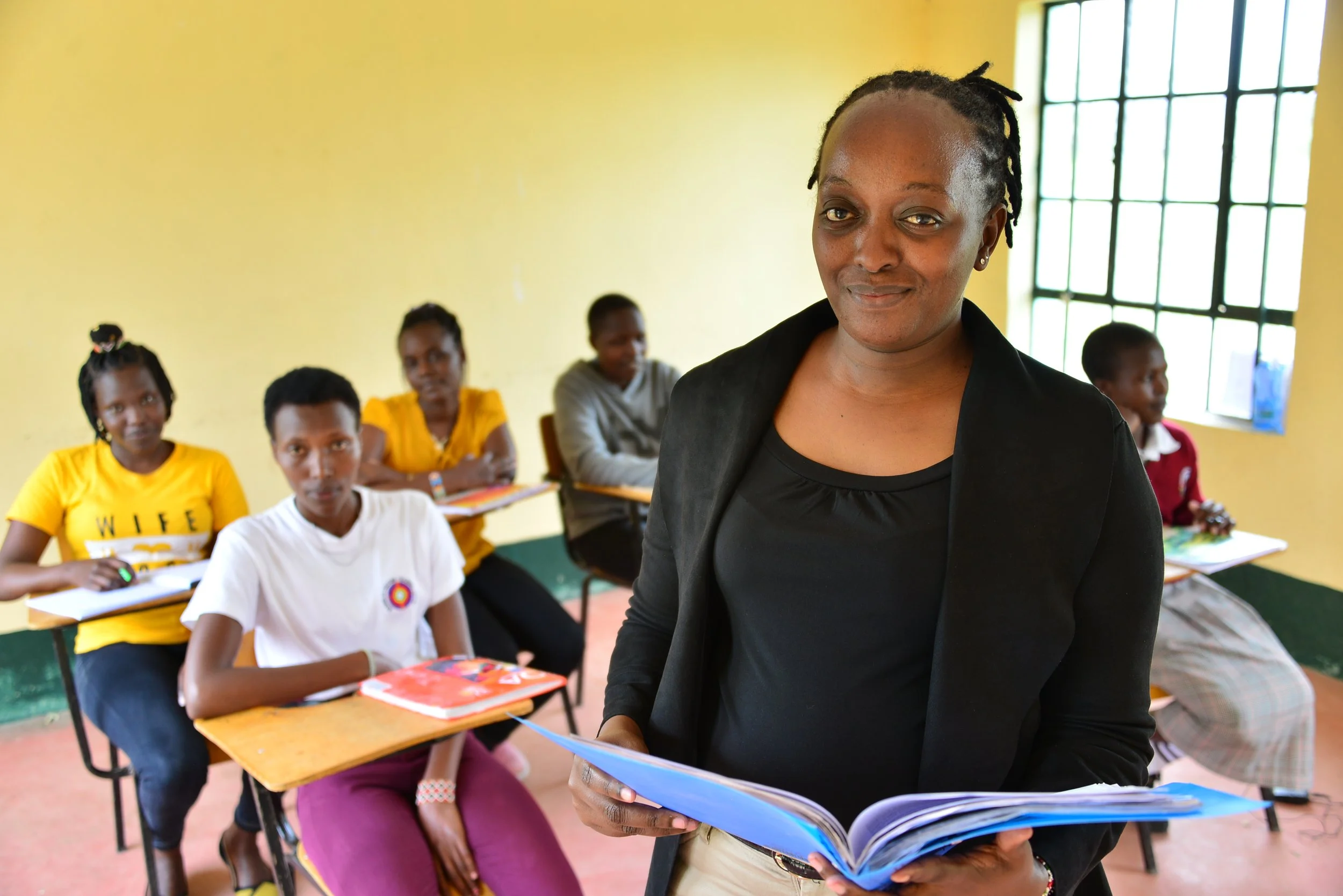
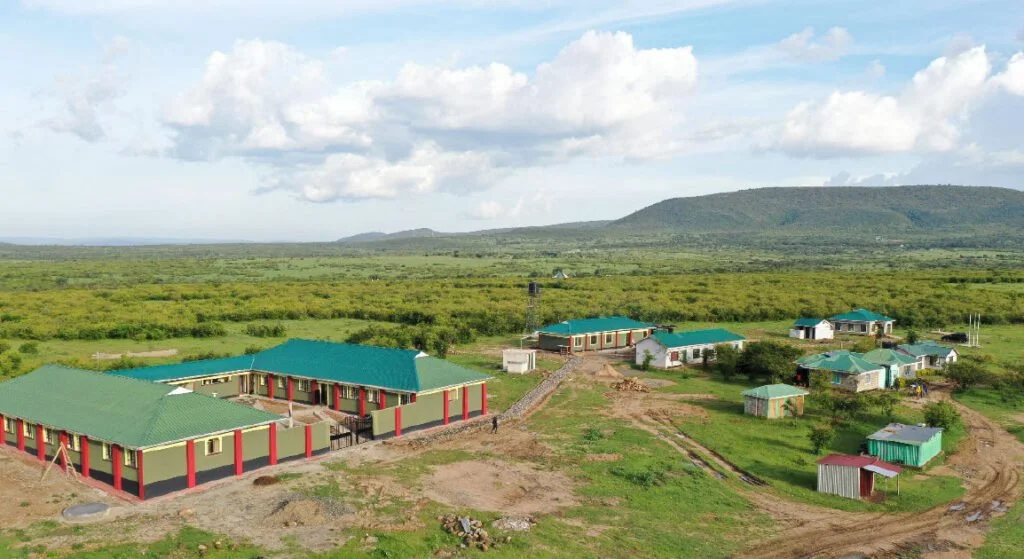
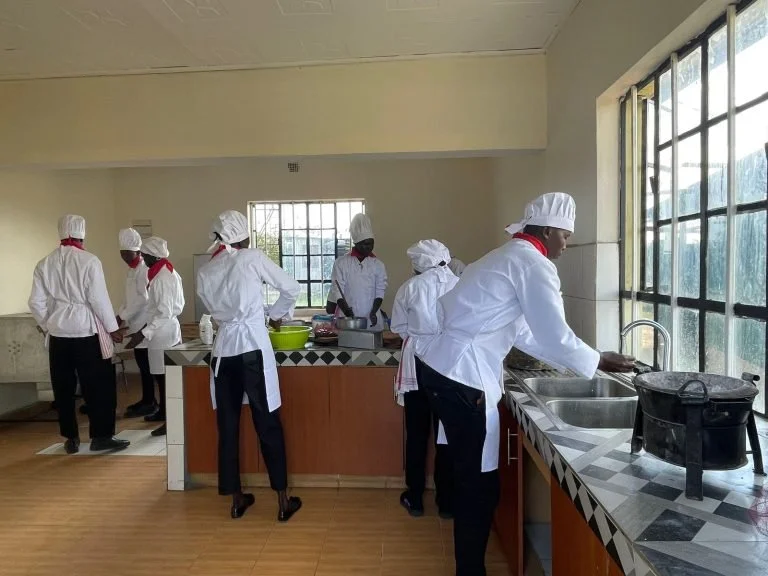
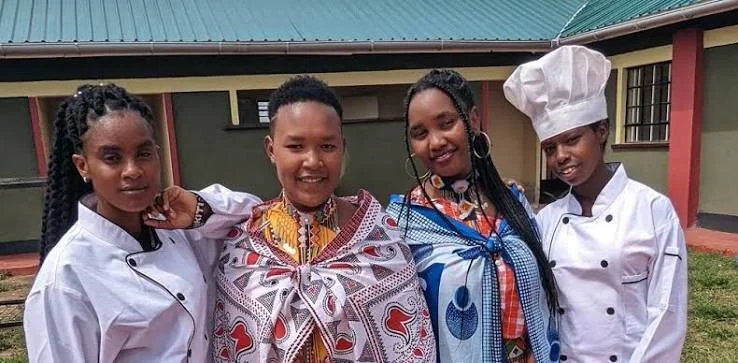
In 2019, we established the Nashulai Cultural Training Centre to change this. Starting with just 10 students, the college has grown into a TVETA-approved vocational training institution offering courses in hospitality and tourism, conservation, Indigenous knowledge, computer studies, and leadership development. We have trained and graduated thousands of local students, equipping young Maasai with skills to participate in and lead the growing tourism and conservation economy of the Mara.
Our goal is not simply to train young people for jobs. It is about ensuring that the people who belong to this landscape have the skills, opportunities and confidence to shape its future. We want young Maasai to build successful careers, support their families and contribute to their communities without having to leave their ancestral lands behind.
As Nashulai grows, so does the role of our training centre. We are building the educational capacity to train not only our own young people, but also to share practical knowledge and skills with neighbouring communities. We see education as an essential part of growing regenerative coexistence, and of ensuring that the next generation has the tools to carry it forward.
Preserving Our Knowledge and Stories
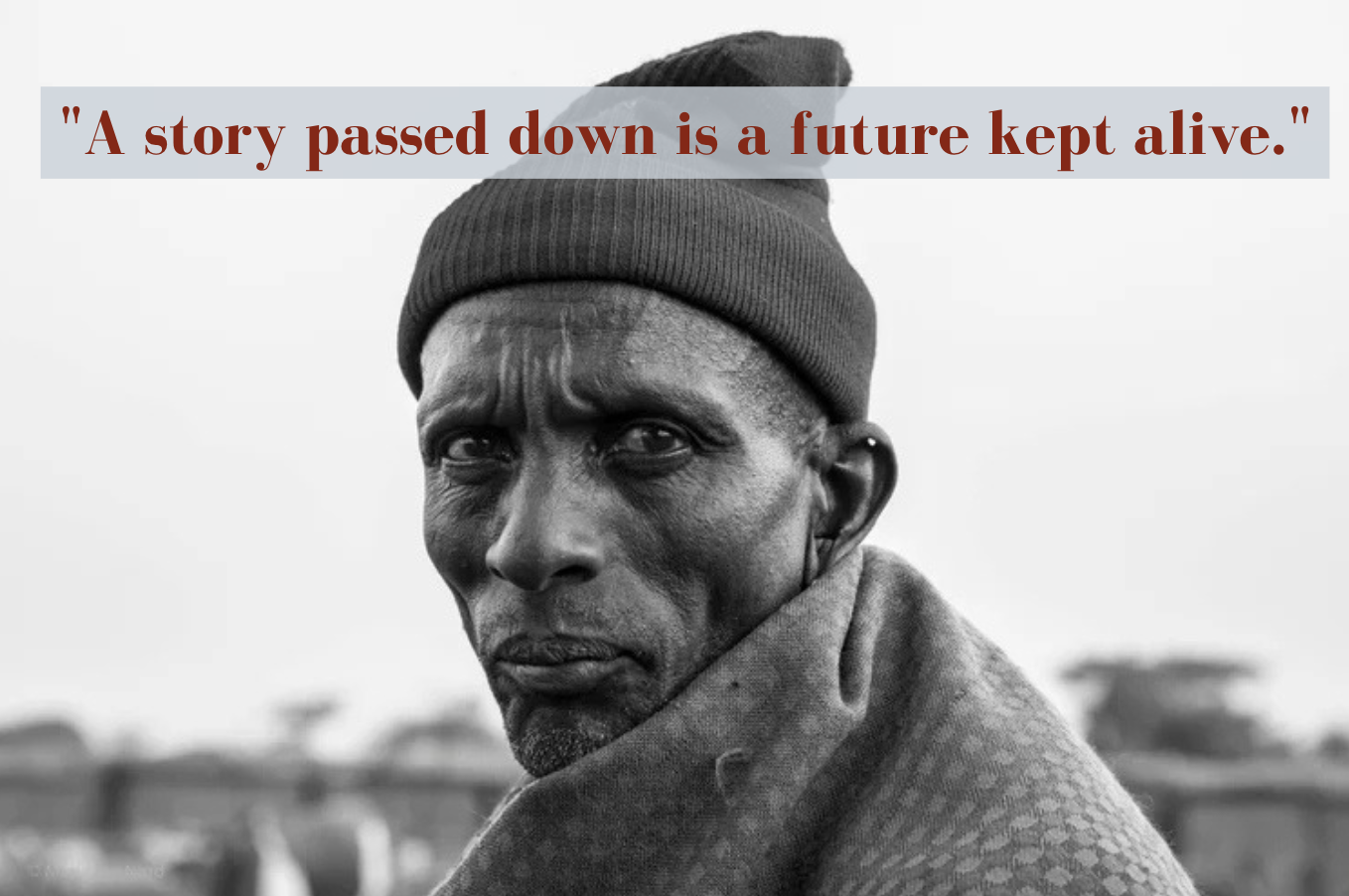
For generations, Maasai knowledge has been shaped by a deep relationship with the land, its wildlife and the seasons. These are stories worth protecting, not only as a record of the past, but as knowledge that can guide the future.
In the Maasai language, Netii Apa means “once long ago.” It is how every story starts.
The true Maasai story is about our relationship to the land, about the people and wildlife who share it. A deep story about how to live harmoniously, with astute attention and profound respect for all that this land has given, and with great courage for all that is required to sustain life here.
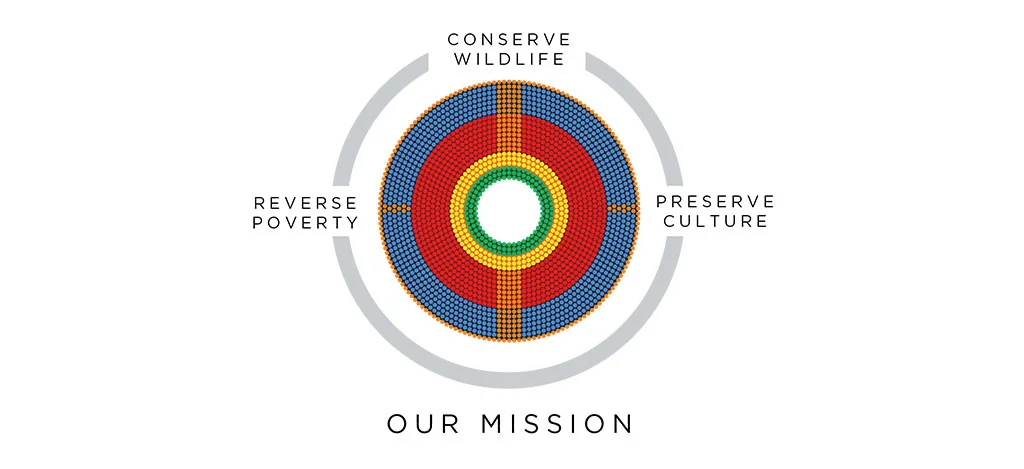
Netii Apa, our Stories Café, is at the heart of the Nashulai endeavor, where our three dimensions, Conserve Wildlife – Preserve Culture – Reverse Poverty, intersect.
The Spiritual Heart of Nashulai
Above all, Netii Apa will be a sacred space for our elders. The building is designed in the form of an enkeguana, the traditional circle of gathering and governance. It will be where our elders congregate, where key decisions about Nashulai are made, and where we hold our ceremonies and rites of passage. It will also be a place where our youth are mentored by their elders, learn what it means to be Maasai and are initiated into our community.
The Storytellers Project
Since the rise of colonialism, our culture has been under threat. Much of our old wisdom and oral language is quickly disappearing. As one of our sayings goes, “When an elder dies, a library burns down.”
Through the Netii Apa Storytellers Project, we are training young Maasai in audio-visual technology to record and catalogue the stories, songs and ancestral knowledge of our elders. By creating a digital library, we aim to preserve this knowledge for future generations and share it with the wider world.
Our vision extends beyond Nashulai. We hope to train young storytellers from neighbouring Maasai communities and eventually throughout Maasailand, building a network of young people who can help keep our stories, language and traditions alive.
A Centre for Learning and Exchange
Netii Apa is also becoming a place where Indigenous knowledge, local tracking and contemporary conservation science can come together. We are developing a research and learning centre where students, researchers, conservation practitioners and visitors can learn directly from our community and exchange knowledge.
We want Netii Apa to be a place where our own knowledge is valued, where different ways of understanding and caring for the land can meet, and where Maasai stories and wisdom can reach far beyond our borders.


“Our community rose up to save this place and become its stewards for the generations to come. Do you think we don’t know how to do that? This is the land where the bones of our ancestors are buried.” — Nelson Ole Reiyia, Co-Founder, CEO, Maasai Elder
Sharing What We've Learned
Building something different was never going to be easy. Over the past decade, Nashulai has faced serious tests, including the social and economic pressures of COVID-19, rapid climate change, and external development pressures that challenged our ability to continue.
There were times when the future of Nashulai was far from certain. Yet our community remained resilient. We called on our unique ancestral knowledge and built on our belief of the fundamental importance of the coexistence of the land, wildlife, and people.
The successful results (acclaimed by the UNDP in awarding Nashulai the Equator Prize for its “paradigm-shifting work”) are clear in the pride of the community and the heartening return of the grasslands and the wildlife.
Nashulai's story is not simply one of survival. It is a story of an Maasai community building an inspiring, sustaining model of Indigenous-led conservation for the world’s challenging future.
The challenges Nashulai has worked to address are not unique to our community. Across East Africa and beyond, Indigenous peoples and local communities are caring for lands that are essential to wildlife, biodiversity, and migratory corridors. Many face growing economic and climate pressures, alongside conservation approaches that do not always recognize their rights, knowledge, or aspirations.
Our Mission
Our model brings together three interconnected priorities:
Conserve Wildlife > Preserve Culture > Reverse Poverty
These Are Not Separate Goals

“Children need education and equality to thrive. It is a guiding principle for Nashulai. And the way our community has rallied on behalf of our beloved children is nothing short of amazing.” — Margaret Koshal Reiyia, Nashulai Director of Family, Gender and Education
At Nashulai, conservation is not about choosing between people and wildlife. It is about creating the conditions for both to thrive.
Wildlife cannot thrive in isolation from the communities who share its habitat. Nor can conservation endure if the people living alongside wildlife are left without viable livelihoods or the means to adapt to changing conditions.
Across our 5,000 acres, we have worked to put this principle into practice. Our community has removed fences, reopened wildlife corridors, and returned to shared land use and traditional grazing practices. We are restoring the relationship between people, livestock, and wildlife while developing livelihoods that make conservation viable for our community.
Through land leases and other livelihood initiatives, we have developed ways for landowners to benefit from protecting wildlife and maintaining the ecological health of our land. Education, cultural storytelling, women's empowerment, and opportunities for young people are part of this same effort: building the conditions for our community to thrive on its ancestral land.
Regenerative coexistence is not just an idea we advocate for. It is an approach we have been putting into practice, learning from, and adapting over a decade of real-world experience. Our work continues, but we have built a foundation that others can learn from as they face similar challenges.
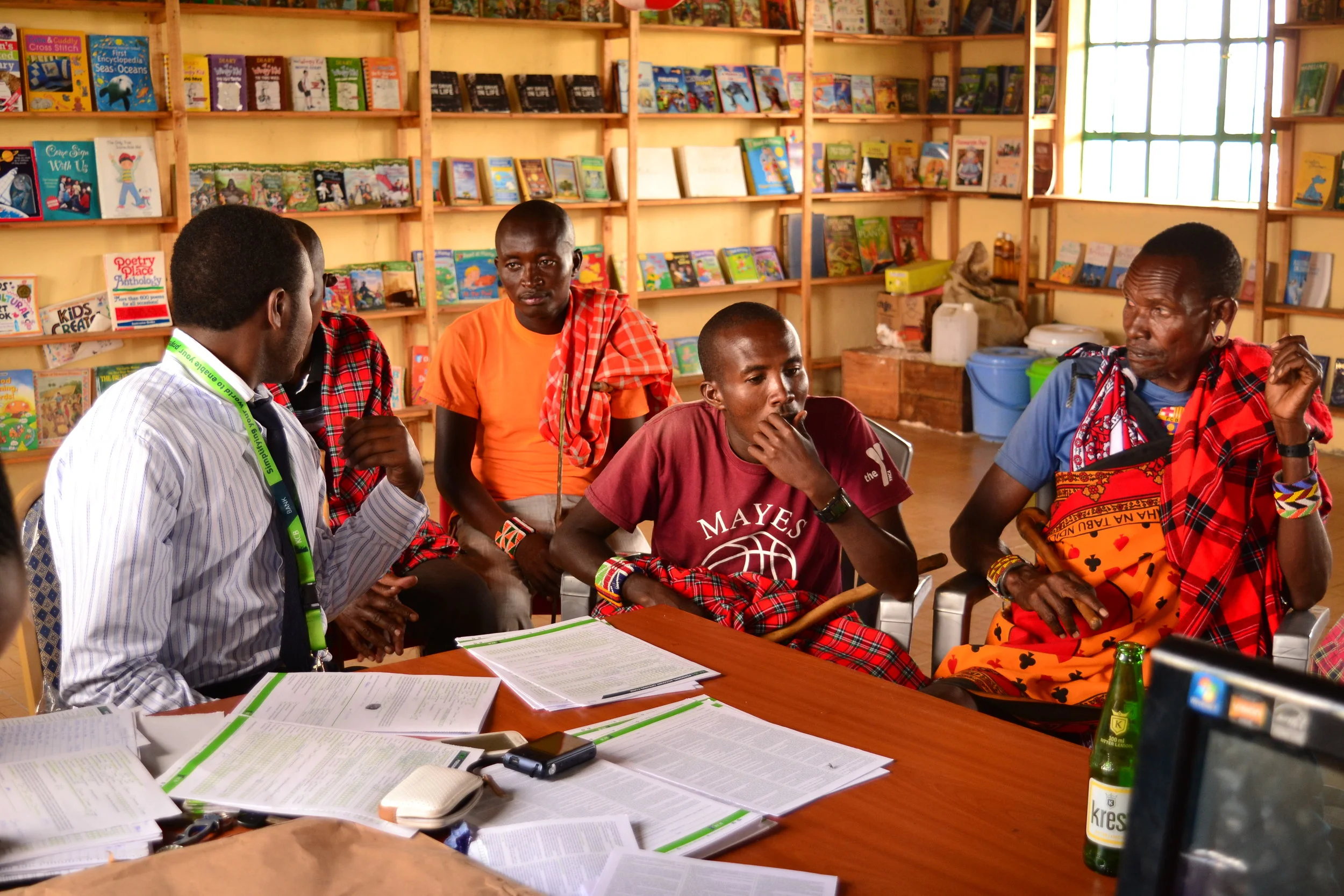
Students collaborating at the Nashulai College.
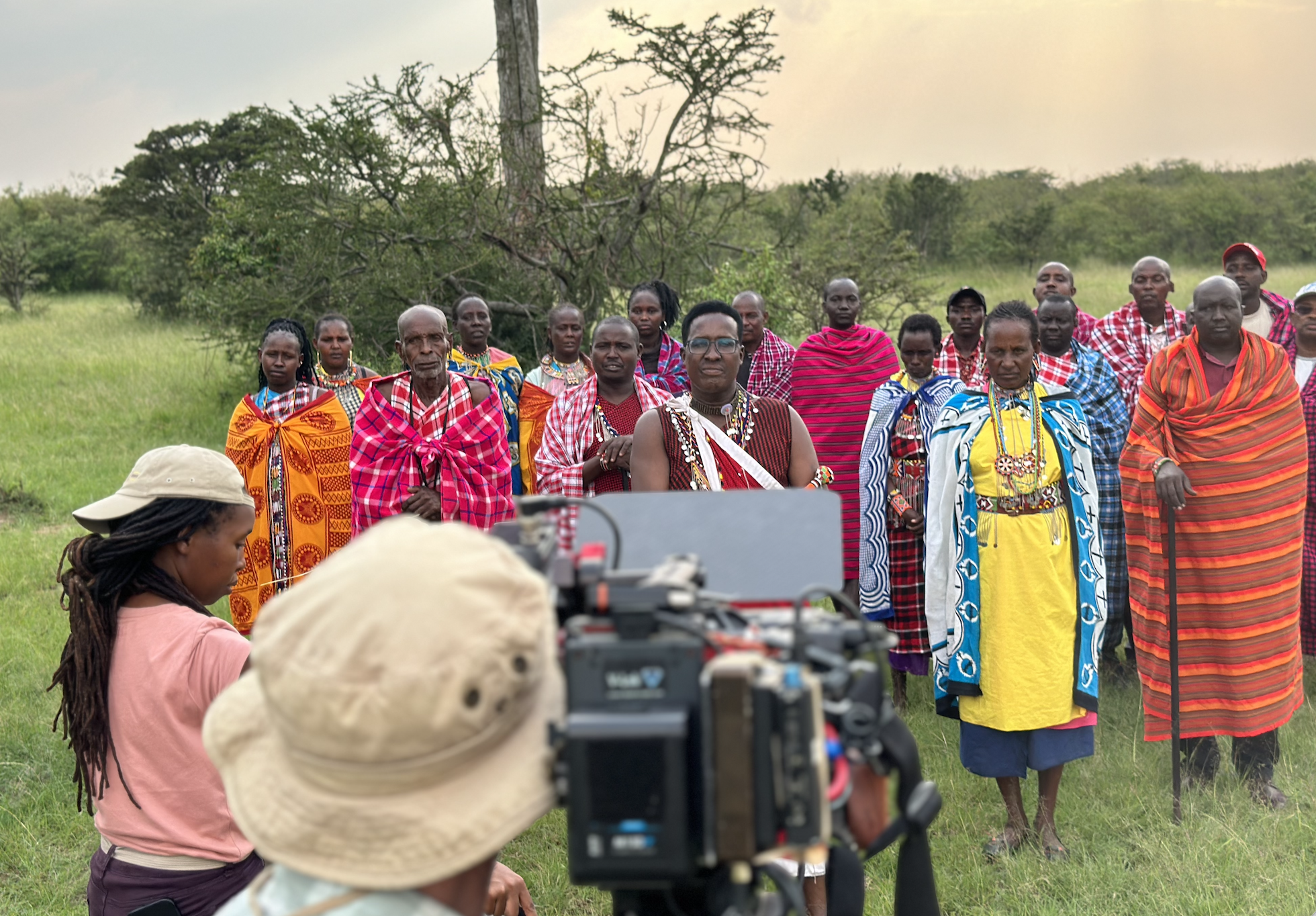
Behind-the-scenes of National Geographic’s Africa Earth’s Wild Home documentary. Nashulai is featured in Episode 7, “The Future of Africa”
A Movement Whose Time Has Come - Learning Beyond Nashulai
The challenges Nashulai has worked to address are not unique to our community. Across East Africa and beyond, Indigenous peoples and local communities are caring for lands that are essential to wildlife, biodiversity, and migratory corridors. Many face growing economic and climate pressures, alongside conservation approaches that do not always recognize their rights, knowledge, or aspirations.
Our vision reaches beyond the boundaries of Nashulai. The next chapter is about building on what we have learned. We have begun working with communities from across East Africa and beyond to actively promote their ancestral lands, sustain their cultures and livelihoods, and care for the wildlife and ecosystems that connect us all.
Nashulai is more than a conservancy. It is a proven model of Indigenous-led regenerative coexistence, and a movement for a different future of conservation.
Today, we invite others to learn from our experience and help carry this work forward. Together, we can build a future in which people, wildlife, and the land thrive side by side, across East Africa and around the world.
Come experience it. Learn from it. Be part of it.
Ashe oleng. Thank you.
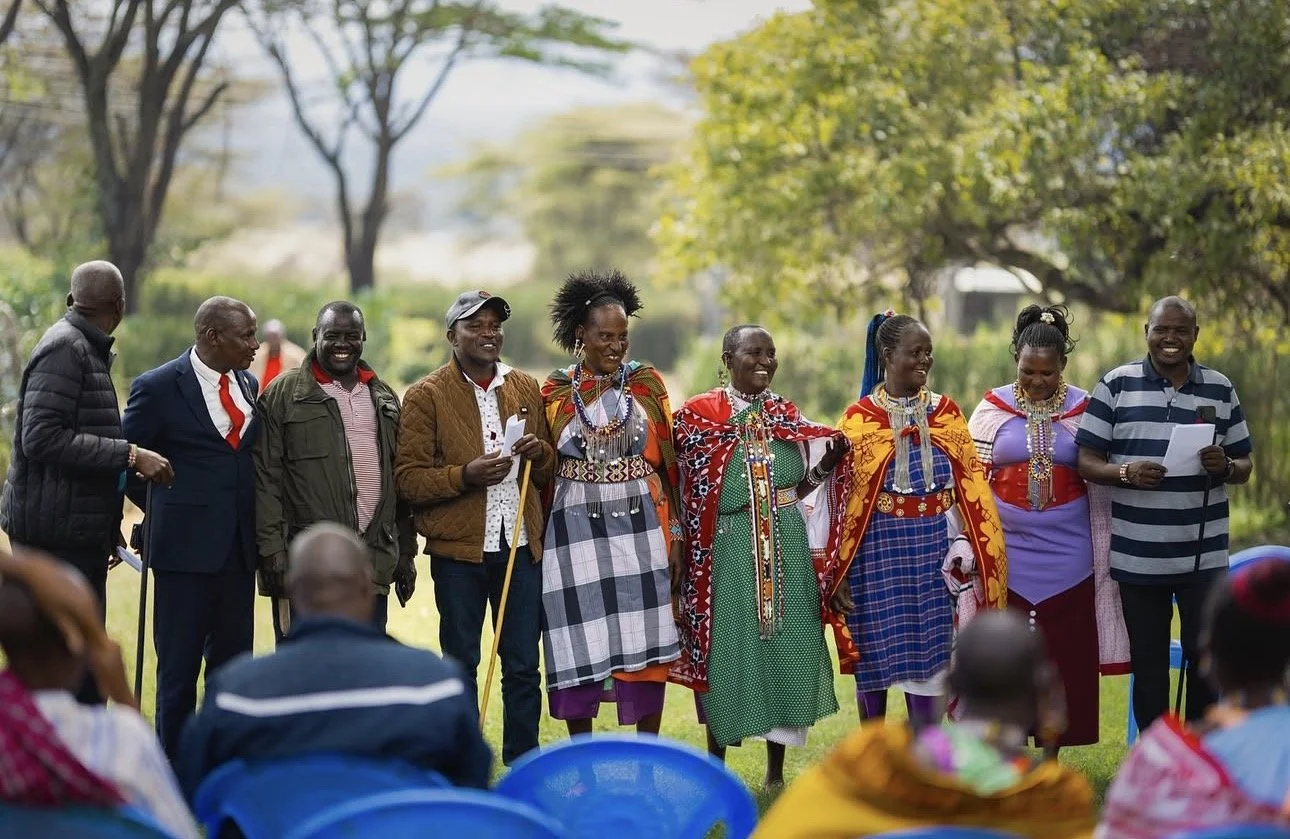
Maasai Elders and youth convening at an conservancy-wide annual meeting.
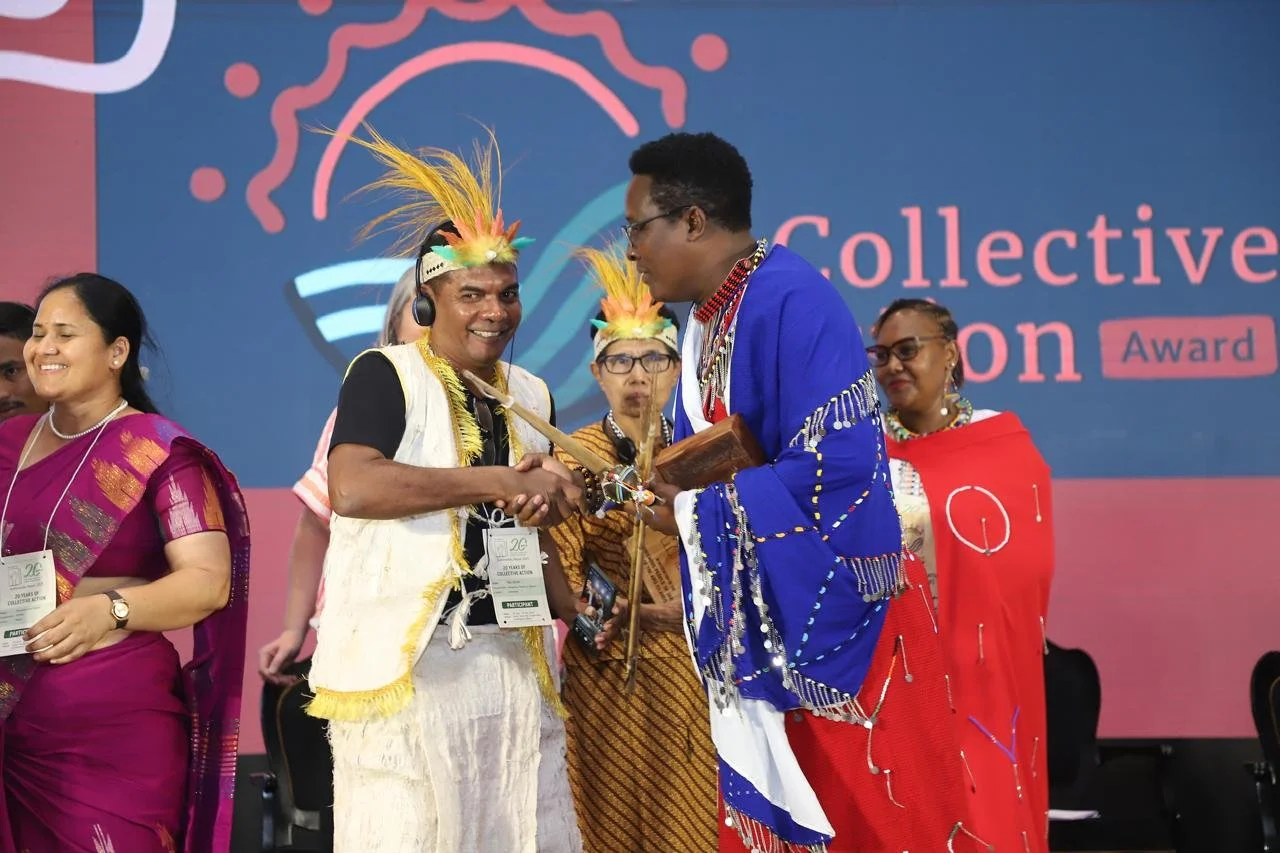
Nashulai Co-Founder, Nelson Ole Reiyia, receiving the inaugural 2025 Collective Action Award from the Rights and Resources Initiative.